DMCs and B2B Travel: Managing an Agent Network and Net Rates Safely
Selling through other agents multiplies your reach — and your paperwork. Here is how DMCs and wholesalers keep rates, partners and margins under control.
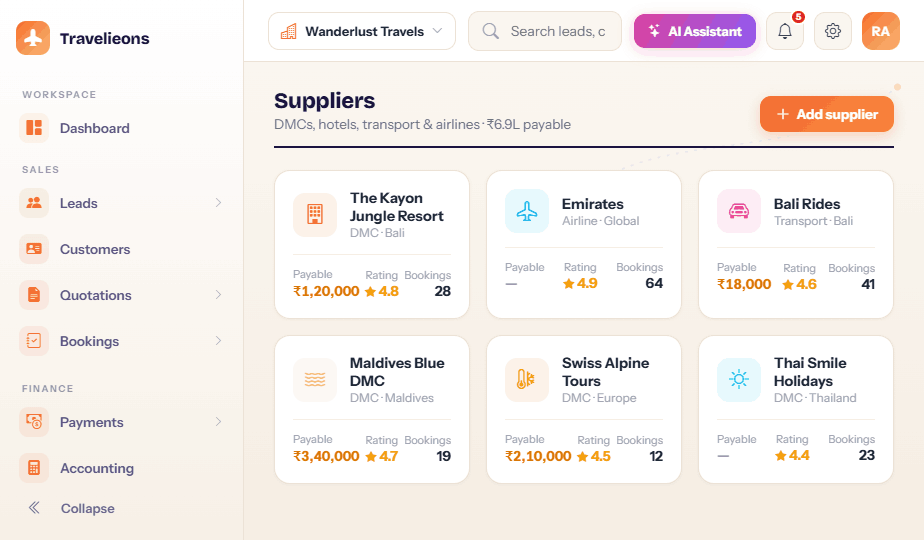
A destination management company (DMC) or travel wholesaler earns most of its business through other agents. That model scales well, but it brings problems a retail agency never sees: dozens of partners, contracted rates that change by season, and margins that depend on who is selling to whom.
The three layers of price
In B2B travel there are usually three prices for the same service:
- Net cost — what the hotel or transport supplier charges you
- B2B price — what you charge the partner agent (net + your markup)
- Selling price — what the partner charges the traveller (B2B + their markup)
Mixing these up — especially showing net cost to the wrong person — is the fastest way to lose a supplier relationship or a partner's trust.
Protect your net rates
Net rates are commercially sensitive. Your sales team often needs to quote without needing to see the underlying cost. A good system lets you:
- Hide supplier net rates from sales roles by default
- Grant visibility only to the people who negotiate contracts
- Keep net cost out of anything client- or partner-facing: PDFs, share links, emails and AI-generated text
Manage partners as accounts
Treat each partner agency as an account with:
- Contact people and their phone numbers
- An agreed markup or commission structure
- Credit terms and outstanding balance
- A history of enquiries, quotations and bookings
This tells you which partners are actually productive, and which ones ask for fifty quotes and book two.
Keep contracted rates current
DMC rates are seasonal: peak, shoulder, low; weekday and weekend; special event surcharges. Keep them as structured rates with validity dates, not as PDFs in an email folder. When a partner asks for a quote, the system should pick the rate valid for their travel dates automatically.
Importing supplier rate sheets
Suppliers still send rates as PDFs and spreadsheets. Re-typing them is slow and error-prone. Modern tools can read a supplier PDF, extract hotels, room types and rates, and let a person review the result before it is saved — keeping a human in the loop for anything financial.
One record from enquiry to settlement
The goal is the same as for a retail agency: one booking record. The partner's enquiry, your quote, their confirmation, the supplier bookings, the partner invoice and the supplier payment should all be linked. Then month-end reconciliation becomes a report, not a project.
How Travelieons helps
Travelieons runs a B2B network and DMC desk side by side with retail. Supplier net cost is a protected permission, partner enquiries and bookings stay on one board with your retail work, DMC PDFs can be imported with AI extraction and human review, and every quote keeps net cost, markup and selling price on each line. Read more on the features page or contact us to discuss your network.