Travel Agency Accounting: Payments, Refunds and Supplier Dues in One Ledger
Money moves in both directions on every trip. If customer receipts and supplier payments live in different places, your margin is a guess.
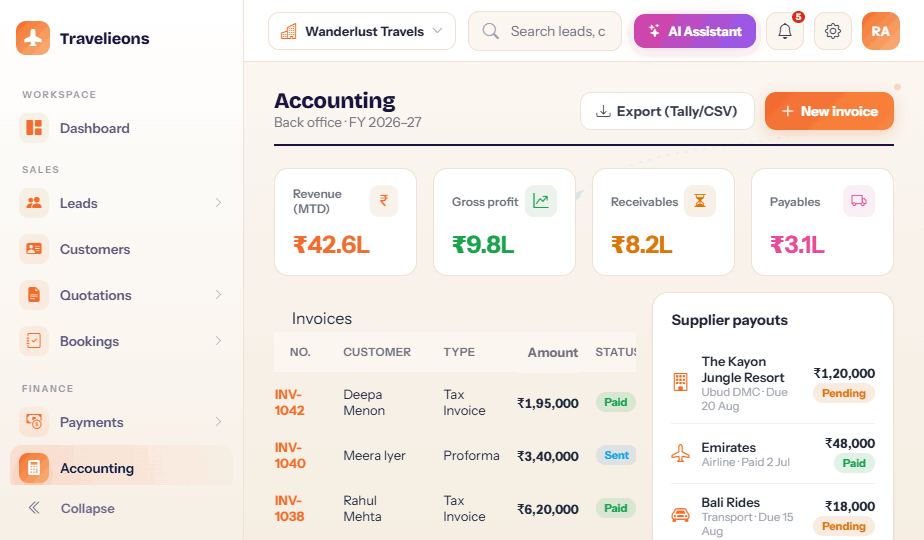
A travel booking is a small financial project. The customer pays an advance and a balance. You pay several suppliers, sometimes in different currencies, sometimes before the customer has paid in full. Occasionally money goes back out as a refund. If all of that lives in separate places — a payment gateway dashboard, a bank statement, a supplier spreadsheet — nobody really knows what the trip earned.
Tie every rupee to a booking
The most important accounting habit for a travel agency is simple: every receipt and every payment is linked to a booking. Then, for any trip, you can see:
- Total selling price and tax
- Received so far, and the balance due
- Paid to each supplier, and what is still owed
- The actual margin
Customer payments
Make it easy for clients to pay and easy for you to record it:
- Send payment links through a gateway such as Razorpay instead of sharing bank details over chat.
- Record every receipt with date, mode and reference — UPI, card, bank transfer, cash.
- Send a receipt automatically when a payment lands.
- Chase balances with scheduled reminders that know the amount due.
Supplier dues
Supplier payments are where cash quietly leaks:
- Record what each booking owes each supplier, and the due date.
- Watch currency: a hotel contracted in USD costs a different number of rupees on the day you pay.
- Review a weekly list of supplier dues so nothing is paid late — or twice.
Refunds deserve a real process
Cancellations happen. A refund should never be "we transferred it and noted it somewhere". It needs:
- An approved refund amount, after cancellation charges
- The actual money-out transaction with a reference
- A matching accounting entry and, where GST was charged, the right tax document
- An update on the booking so it no longer shows as fully paid
Why double-entry matters
Double-entry bookkeeping means every transaction is recorded twice — a debit and a credit that always balance. It sounds old-fashioned, but it is what makes reports trustworthy: if the books balance, money has not appeared or vanished between screens. It also makes your CA's job, and your GST filings, far easier.
Reports you should see every month
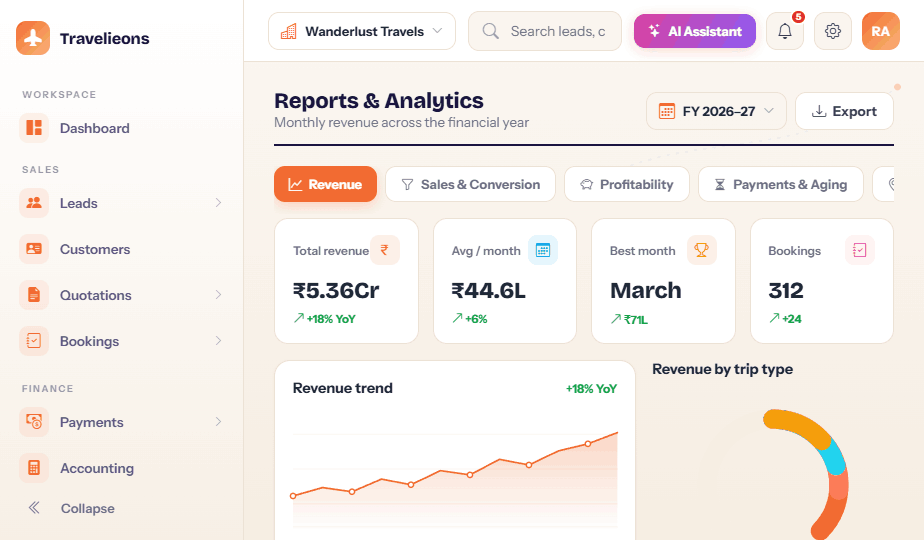
- Revenue and margin by month and by financial year
- Outstanding customer balances, oldest first
- Supplier dues by due date
- Refunds issued
- Margin by destination, product and sales agent
How Travelieons helps
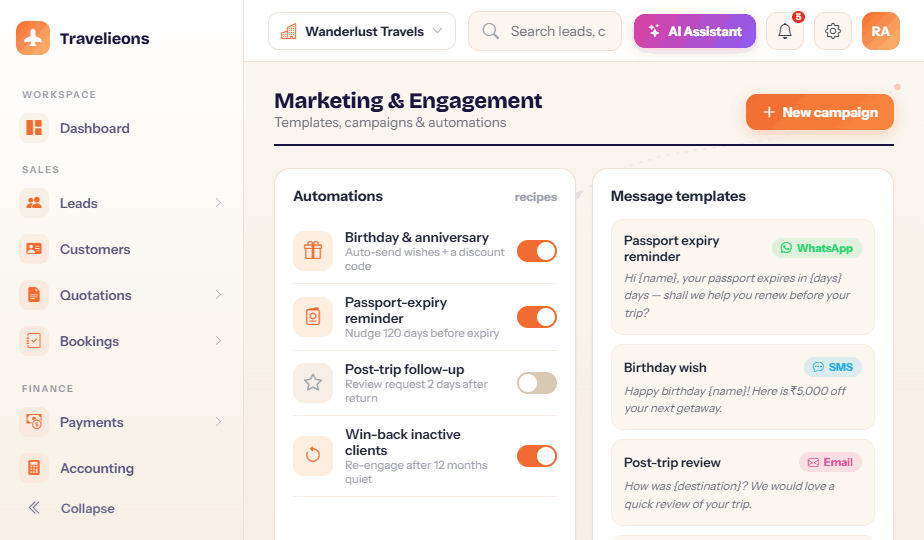
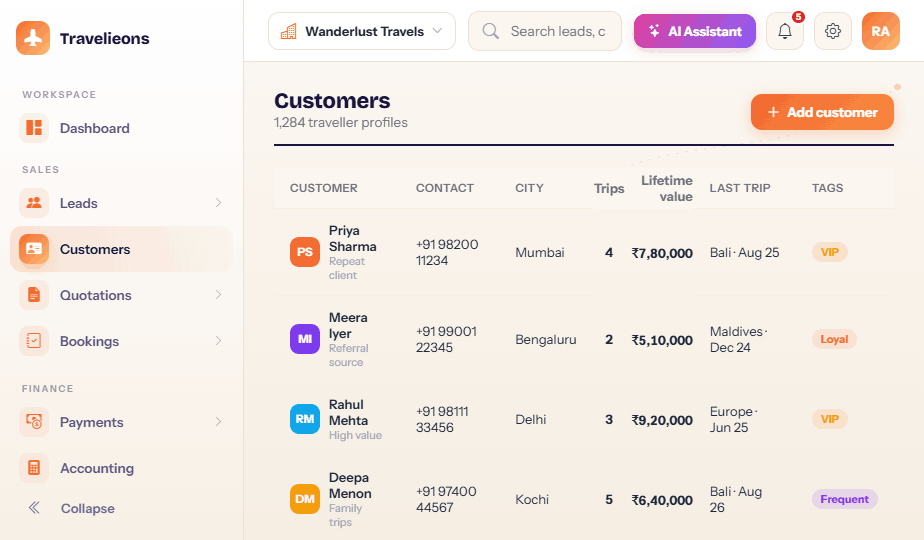
In Travelieons, payments, refunds and supplier dues sit on the booking and post to a double-entry ledger that always balances. Payment links go out through supported gateways, refunds have their own money-out path with a ledger entry, invoices carry the GST split, and reports show revenue and margins by financial year. Explore the features or see pricing.